

What biomolecule purification is
Biomolecule purification is the process of isolating a target molecule, such as a protein, enzyme, antibody, DNA, or RNA, from the complex mixture inside a cell. It is used throughout biotechnology, from basic research and diagnostic test development to therapeutic drugs, vaccines, and industrial enzymes for food production, textiles, and biofuels.
No single step gets a sample from a cell to a pure product. Instead, labs combine several techniques, and filtration shows up at almost every stage: clearing out debris, concentrating the sample, swapping buffers, and preparing samples for analysis.
Where filtration fits in the workflow
Here is how a typical protein purification moves from cells to a purified sample. Not every workflow uses every step.
- Break open the cellsCell lysis breaks down cell walls and membranes to release the target molecule into solution, along with everything else inside the cell.
- Clarify the lysateLarger debris is spun down by centrifugation, then the liquid is filtered to remove what is left. 0.2 or 0.45 µm
- Concentrate and exchange buffersUltrafiltration holds back the target molecule while water, salts, and small molecules pass through. Centrifugal filter tubes do this in a single spin. MWCO based
- Precipitate, if neededSome workflows add ammonium sulfate to precipitate proteins, a technique called salting out. The precipitate is collected by centrifugation and redissolved.
- Purify and analyzeChromatography separates the target from remaining molecules by size, charge, or binding affinity. Samples headed to HPLC are filtered first to protect the column. 0.2 or 0.45 µm
How to choose the right filter
Micro, ultra, or nanofiltration
Microfiltration membranes are rated by pore size in microns and remove cells and debris while your proteins pass through. Ultrafiltration membranes are rated by molecular weight cutoff (MWCO) and hold back proteins and nucleic acids while water and salts pass through, which is how samples are concentrated or moved into a new buffer. Nanofiltration works at even smaller cutoffs to remove salts and small molecules.
Picking an MWCO
For ultrafiltration, choose an MWCO well below the molecular weight of your target so it stays on the membrane. Going too close to your target’s size risks losing it in the filtrate.
Membrane material
For protein work, choose a low protein binding membrane such as PES, PVDF, or cellulose acetate so your target does not stick to the filter. Nylon binds more protein and can lower your yield. For DNA and RNA, many labs use spin-column kits designed for nucleic acid purification, such as those from Qiagen.
Best practices
- Spin down heavy debris before filtering a lysate so the filter does not clog right away.
- Keep protein samples cold during purification to help preserve their activity.
- Always filter samples before HPLC to protect the column from particulates.
- Check your membrane against the chemical compatibility chart when working with solvents or harsh buffers.
Products used in this workflow
-
Centrifugal Filter Tubes
Concentrating proteins and exchanging buffers.
Shop Centrifugal Filters -
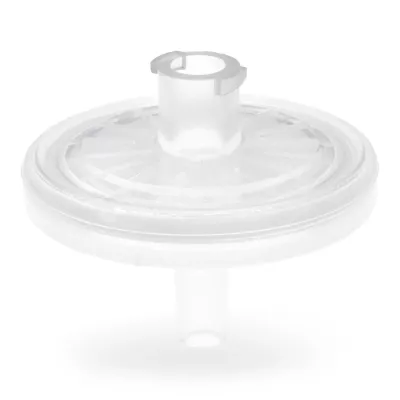
Syringe Filters
Clarifying lysates and prepping HPLC samples.
Shop Syringe Filters -
Chromatography Supplies
Vials, caps, and septa for HPLC analysis.
Shop Chromatography -
Qiagen
Kits for DNA and RNA purification.
Shop Qiagen
Frequently asked questions
What is the difference between microfiltration, ultrafiltration, and nanofiltration?
Microfiltration uses membranes rated by pore size in microns to remove cells and debris while proteins pass through. Ultrafiltration uses membranes rated by molecular weight cutoff (MWCO) to hold back proteins and nucleic acids while water, salts, and small molecules pass through, which is how samples are concentrated or moved into a new buffer. Nanofiltration works at even smaller cutoffs and is used to remove salts and small molecules.
Which membrane is best for filtering protein solutions?
Use a low protein binding membrane such as PES, PVDF, or cellulose acetate. Nylon binds more protein, which can lower your yield.
What is salting out?
Salting out is a way to precipitate proteins by adding a high concentration of salt, most often ammonium sulfate. The salt competes with the proteins for water, so the proteins become less soluble and come out of solution. The precipitate is then collected by centrifugation and redissolved for the next step.
When should I use chromatography instead of membrane filtration?
Membrane filtration is best for clarifying, concentrating, and exchanging buffers. Chromatography separates molecules by size, charge, or binding affinity, so it is used when you need to isolate one molecule from others at high purity. Most workflows use both.
What pore size should I use after cell lysis?
After spinning down the larger debris, a 0.2 or 0.45 µm syringe or membrane filter is commonly used to clarify the lysate before downstream steps.