


How filtration is used in bioscience
Bioscience filtration generally falls into three processes. Matching the right pore size, membrane, and equipment to each one keeps results accurate and reproducible.
Purification & Sterilization
Buffers and media pass through a 0.22 µm or smaller membrane that removes microorganisms and contaminants. Hydrophilic, low protein binding PES and PVDF are the usual choice.
Concentration & Storage
Protein, DNA, and RNA samples are often dilute in buffer. Concentrating them by ultrafiltration improves stability and saves storage space.
Isolation
A vacuum draws buffer through a membrane that retains the material you need, ready for growing cultures or direct examination.
Popular products for bioscience
-
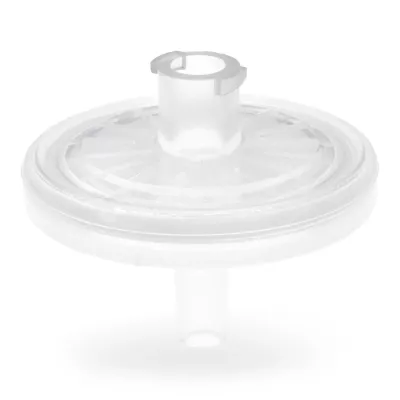 Syringe Filters
PES Syringe Filters, 0.45µm, 25mm, Nonsterile, 100/Pk
Low protein binding for aqueous samples$121.95View Product -
Syringe Filters
Nylon Syringe Filters, 0.45µm, 25mm, Nonsterile, 100/Pk
General sample prep, including HPLC$101.95View Product -
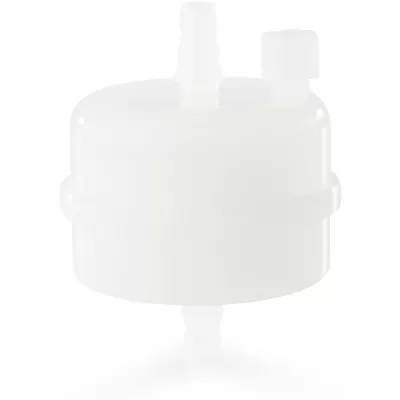 Capsule Filters
Polypropylene Capsule Filter, 1.0µm, 72mm x 95mm, Nonsterile, 1/Pk
Prefiltration for larger process volumes$49.99View Product
Looking for something else? Browse all syringe filters, membrane filters, or the full catalog.
Quick reference
Open a section when you need it.
Which membrane should I use?PES, PVDF, cellulose acetate, MCE, nylon, and PTFE compared
| Membrane | Character | Best for | Keep in mind |
|---|---|---|---|
| PES | Very low binding | Sterile filtration of media, buffers, and protein solutions | Fast flow rates; check compatibility with organic solvents |
| PVDF | Very low binding | Protein samples and HPLC sample prep | Use the hydrophilic version for aqueous samples |
| Cellulose Acetate | Very low binding | Tissue culture media and protein solutions | Best suited to aqueous samples |
| MCE | Higher binding | Microbiological analysis and retaining cells or particles on the membrane | Not ideal when you need to recover protein from the filtrate |
| Nylon | Higher binding | General aqueous and organic sample prep | Avoid for low-concentration protein samples |
| PTFE | Hydrophobic | Organic solvents and gas venting | Needs pre-wetting for aqueous samples; usually not the first choice for biological buffers |
Not sure about a specific solvent? Check the chemical compatibility chart.
Which pore size do I need?From 0.1 µm mycoplasma reduction to prefiltration
- 0.1 µmMycoplasma reductionFor media and sera where mycoplasma contamination is a concern.
- 0.2 / 0.22 µmSterile filtrationThe standard for sterilizing buffers, media, and other heat-sensitive solutions.
- 0.45 µmClarification and general prepRemoves particulates before analysis, including HPLC sample prep and microbiological testing.
- 0.8 µm and upPrefiltrationProtects your final filter when samples are viscous or heavily loaded.
Pick the largest pore size that still does the job. Going smaller than needed slows flow and clogs filters faster.
Which filter format fits my volume?Syringe, membrane, or capsule by sample size
| Sample volume | Recommended format | Shop |
|---|---|---|
| Up to about 10 mL | 13mm syringe filter | Syringe Filters |
| About 10 to 100 mL | 25mm syringe filter | Syringe Filters |
| Larger batches | Membrane filter with a vacuum setup | Membrane Filters |
| Process volumes | Inline capsule filter | Capsule Filters |
Volumes are typical ranges. Viscous or heavily loaded samples may need a larger format or a prefilter.
Bioscience filtration FAQs
What pore size do I need for sterile filtration?
Use a 0.2 or 0.22 µm filter for sterile filtration of buffers, media, and other heat-sensitive solutions. For biological samples, pair it with a hydrophilic, low protein binding membrane such as PES, PVDF, or cellulose acetate.
Which membrane has the lowest protein binding?
PES, PVDF, and cellulose acetate all have very low protein binding, which makes them good choices when you need to recover proteins from the filtrate. Nylon and MCE bind more protein.
Can I use a PTFE filter for aqueous samples?
PTFE is hydrophobic, so water will not pass through it unless the membrane is pre-wetted, usually with an alcohol. For aqueous biological samples, a hydrophilic membrane is usually the simpler choice.
Do you carry sterile syringe filters?
Yes. Tisch Scientific carries both sterile and nonsterile syringe filters. Each product listing shows whether that item is sterile.
Can you quote a full lab supply list or a custom filter?
Yes. Send us your supply list and we will quote everything we can. We also quote custom filtration products for non-standard specs.