

What cell culturing and tissue engineering involve
In cell culturing, cells taken from tissue are grown in a controlled environment, usually in flasks or plates filled with a liquid growth medium, inside an incubator. As the cells multiply, they can be used for genetic research, toxicology studies, drug testing, and the production of therapeutic proteins.
In tissue engineering, cells are seeded onto a scaffold made of natural or synthetic material and grown in an incubator or bioreactor. Over time, the cells form new tissue on the scaffold, with the goal of repairing or replacing damaged tissue.
Both depend on a clean, consistent environment. A single contaminant in the media can ruin weeks of work, which is why sterile filtration of everything that touches the cells is a routine part of the workflow.
Where filtration fits in the workflow
Filtration is applied to the liquids that support the cells, not to the cells themselves. Here is where it shows up in a typical workflow.
- Prepare media and buffersGrowth media, buffers, and heat-sensitive additives are sterile filtered before use. 0.2 / 0.22 µm
- Filter serum and supplementsSerum such as FBS and other supplements are filtered to remove contaminants. Use 0.1 µm when mycoplasma is a concern. 0.1 to 0.2 µm
- Seed the cellsCells are placed into culture vessels or onto a scaffold with the filtered media. No filtration happens at this step.
- Feed and incubateFresh, sterile-filtered media is added as cells grow. Larger bioreactor feeds are often filtered with capsule filters. 0.2 / 0.22 µm
- Harvest and processCells, tissue, or secreted proteins are collected. Proteins can be concentrated with centrifugal filter tubes. MWCO based
How to choose the right filter
Pore size
Use a 0.2 or 0.22 µm filter for sterile filtration of media and buffers. Step down to 0.1 µm for serum or other liquids where mycoplasma is a concern. A 0.45 µm filter is fine for clarifying solutions that do not need to be sterile.
Membrane material
Media and serum contain proteins and growth factors you want to keep, so choose a hydrophilic, low protein binding membrane. PES, hydrophilic PVDF, and cellulose acetate are the go-to choices. MCE and nylon bind more protein, so use them with care, and skip PTFE for media since it is hydrophobic and will not wet with water.
Format by volume
For up to about 10 mL, a 13mm syringe filter is the quickest option. From about 10 to 100 mL, use a 25mm syringe filter or a membrane filter with a vacuum setup. Larger batches and bioreactor feeds are best handled with a capsule filter, and centrifugal filter tubes are the tool for concentrating proteins. Viscous or heavily loaded liquids may need a larger format or a prefilter.
Best practices
- Use a new sterile filter for every filtration. Never reuse filters for cell culture work.
- Filter heat-sensitive additives rather than autoclaving them, since heat can damage proteins and growth factors.
- When you switch media formulations, filter a small test volume first.
- Check your membrane against the chemical compatibility chart before ordering.
Products used in this workflow
-
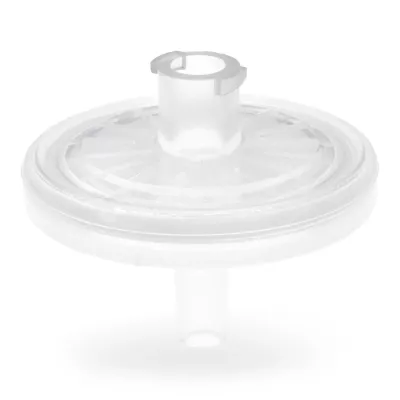
Syringe Filters
Sterile filtering small volumes of media and buffers.
Shop Syringe Filters -
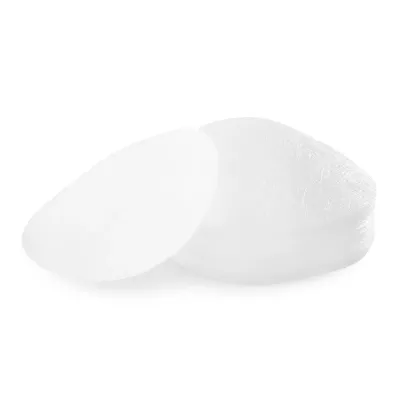
Membrane Filters
Vacuum filtration of medium-sized batches.
Shop Membrane Filters -
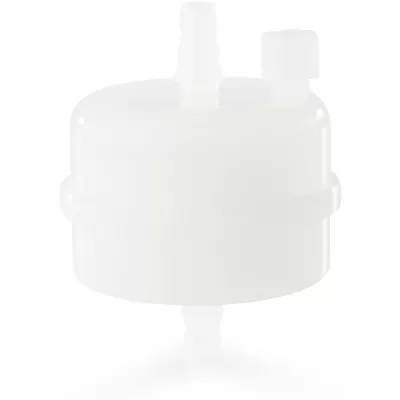
Capsule Filters
Larger batches and bioreactor feeds.
Shop Capsule Filters -
Centrifugal Filter Tubes
Concentrating and buffer-exchanging proteins.
Shop Centrifugal Filters
Frequently asked questions
What pore size is used for sterile cell culture filtration?
A 0.2 or 0.22 µm membrane is the standard for sterile filtering cell culture media, buffers, and supplements. It removes bacteria. If mycoplasma is a concern, such as with serum, use a 0.1 µm filter, since mycoplasma can pass through 0.2 µm membranes.
Which membrane is best for protein-containing media and serum?
Choose a low protein binding membrane such as PES, PVDF, or cellulose acetate. Nylon binds more protein, which can lower the concentration of growth factors and other proteins in your media.
Do I filter the cells themselves?
No. Sterile filters would hold back your cells along with any contaminants. Filtration is used on the liquids that support the cells, such as media, buffers, serum, and supplements, before they reach the culture.
Can I reuse a syringe filter for cell culture media?
No. A filter used for sterile filtration should be used once and discarded. Reuse risks contaminating your culture and damaging the membrane.
How do I check that a filter is compatible with my media?
Check your membrane against our chemical compatibility chart. When you switch to a new media formulation, filter a small test volume first before committing a full batch.