

Who regulates consumer goods
Consumer goods are held to standards that protect the people who use them, and the agency in charge depends on the product. The FDA oversees foods including bottled water, cosmetics, and over-the-counter drugs. The Consumer Product Safety Commission oversees many household products, and the EPA regulates disinfectants and other pesticide products.
Filtration supports compliance in two ways. It helps make products clean and consistent during manufacturing, and it prepares samples for the testing that shows they meet the standard.
Where filtration fits
- Raw materialsWater and liquid ingredients are filtered to remove particulates before formulation.
- Product filtrationProducts are clarified, and those that require it are sterile filtered. 0.45 or 0.2 µm
- PackagingGases used in packaging are filtered to keep contaminants out.
- Quality control testingSamples are filtered before HPLC or GC analysis, and membrane filters are used in microbial testing.
- DocumentationResults and records show the product meets its requirements.
Filtration by product category
Bottled water
Bottled water must meet FDA quality standards. Filtration removes particles and microorganisms, and the filters themselves must not add contaminants to the water.
Personal care and cosmetics
Lotions, shampoos, and cosmetics are manufactured to limit microbial contamination. Filtration clarifies raw materials and removes particulates from formulations.
Over-the-counter medications
OTC drugs follow drug manufacturing requirements. Liquid products that cannot be heat sterilized may be sterile filtered, and samples are tested to confirm active ingredient levels.
Household products
Cleaners and other household chemicals are tested to confirm their composition and label claims. These products are often harsh, so chemically resistant filters such as PTFE are a common choice for sample prep.
How to choose the right filter
Materials that do not add contaminants
A filter should remove contaminants without adding any of its own. Confirm that a filter’s materials are suitable for your product, especially for food contact, and talk to our team if you need documentation for a specific product.
Membrane and pore size
For water-based products, hydrophilic membranes such as PES and PVDF are common choices. PTFE suits harsh chemicals and gases. Use 0.2 µm for sterile filtration, 0.1 µm when mycoplasma is a concern, and 0.45 µm for clarification.
QC sample prep
Filter samples with a 0.45 µm syringe filter for standard HPLC, or 0.2 µm for UHPLC, before they go into chromatography vials. Datasheets and certificates of analysis are on our Downloads and Datasheets page.
Products used in this workflow
-
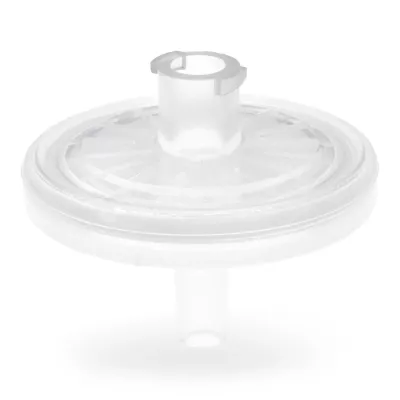
PES Syringe Filters, 0.45µm
QC sample prep for aqueous products.
View Product -
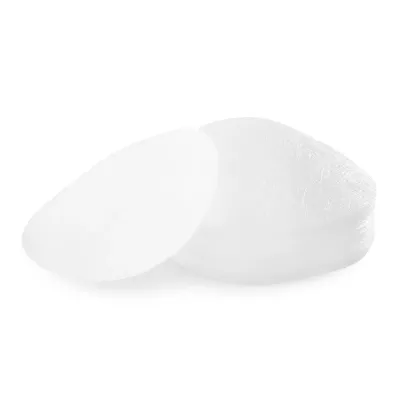
Membrane Filters
Lab filtration and microbial testing.
Shop Membrane Filters -
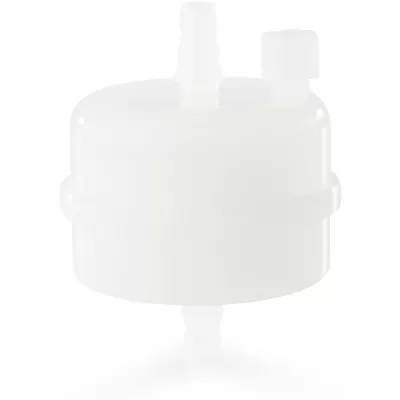
Capsule Filters
Inline filtration for production lines.
Shop Capsule Filters -
Chromatography Supplies
Vials, caps, and septa for HPLC and GC.
Shop Chromatography
Frequently asked questions
Who regulates consumer goods in the United States?
It depends on the product. The FDA oversees foods including bottled water, cosmetics, and over-the-counter drugs. The Consumer Product Safety Commission oversees many household products, and the EPA regulates disinfectants and other pesticide products.
Why does the filter material matter?
A filter should remove contaminants without adding any of its own. Filter components can release trace substances into a product, so manufacturers need to confirm that a filter’s materials are suitable for their product, especially for food contact.
What pore size is used for sterile filtration?
A 0.2 or 0.22 µm membrane is the standard for sterile filtration. A 0.1 µm membrane is used when mycoplasma is a concern, and 0.45 µm is common for clarification when sterility is not required.
Why filter samples before HPLC or GC?
Filtering removes particles that can damage the column and affect results, so the test reflects the product itself. A 0.45 µm syringe filter is common for standard HPLC, and 0.2 µm is used for UHPLC.
Where can I find product documentation?
Datasheets, certificates of analysis, and other documentation are on our Downloads and Datasheets page. For documentation on a specific product or lot, contact our team.