

Why environmental monitoring matters
Since the Industrial Revolution, manufacturing has driven enormous progress, from new chemicals and materials to new energy sources and global transportation. That growth has also produced pollution, and for a long time the approach was to deal with it later.
Today, governments set limits on how much pollution can be released and how clean the air and water must be. Environmental monitoring is how those limits are checked. According to the EPA, about 140 million people in the United States lived in counties with pollution levels above at least one national air quality standard in 2023, which is why reliable monitoring data matters.
How air quality is tracked
Monitoring happens at two levels. Ambient monitoring networks measure the air people breathe across a region and compare it to national air quality standards. Facility permits set emission limits for individual sources, which are verified through emissions testing and reporting. Together, they show both how clean an area’s air is and whether individual sources are staying within their limits.
How air monitoring works
For particulate matter, ambient monitoring comes down to a filter.
- Place the samplerSamplers are sited to measure the air quality an area needs to track.
- Draw air through a filterAir passes through the filter at a controlled, calibrated flow rate for a set period.
- Capture particulateParticles collect on the filter media.
- Weigh and analyzeIn the lab, the filter is weighed and can be analyzed further to identify what the particles are and where they likely came from.
- Compare and reportResults are compared against air quality standards and reported to regulators.
Beyond air: water monitoring
Filtration is just as central to water monitoring. Water samples are commonly filtered through a 0.45 µm membrane before dissolved metals analysis, and what passes through is reported as the dissolved fraction. Drinking water is tested for bacteria such as E. coli by filtering a sample through a 0.45 µm cellulose ester membrane that holds the bacteria for growth and counting. Learn more in our Regulatory and Compliance guide.
Choosing filter media
For air sampling, PTFE membranes are called for by the EPA PM2.5 reference method and add little background to samples that will be chemically analyzed. Quartz fiber handles high temperatures and is low in trace metals, which makes it a common choice when samples will be analyzed for carbon. Glass fiber is the filter specified for the TSP high-volume reference method.
For water and lab analysis, 0.45 µm membrane filters and syringe filters are the workhorses. If samples are headed for HPLC, use a 0.45 µm syringe filter for standard HPLC or 0.2 µm for UHPLC. Always follow the filter requirements in your method.
Products used in this workflow
-
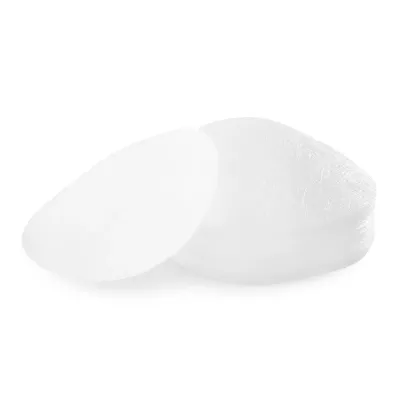
PM2.5 PTFE Filters
Lot-tested against 40 CFR Part 50, Appendix L criteria.
View Product -
Membrane Filters
Air sampling and water testing membranes.
Shop Membrane Filters -
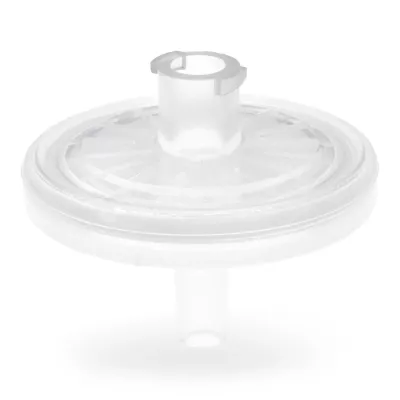
Syringe Filters
Water sample prep and HPLC prep.
Shop Syringe Filters -
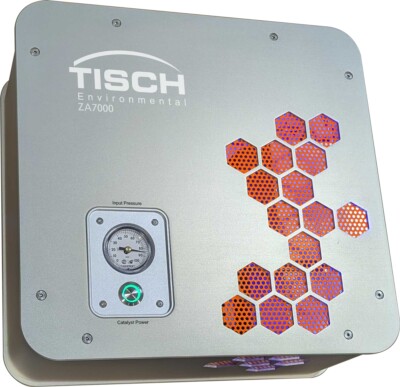
ZA Series Zero Air Generators
On-demand zero air for GC and analyzers.
View Series
Frequently asked questions
What role does filtration play in environmental monitoring?
Filters are where many environmental samples are collected. Air is drawn through a filter that captures particulate, and water is filtered to separate what is dissolved from what is suspended. The filter or the filtered sample is then weighed or analyzed in a lab.
What filter does the EPA PM2.5 reference method call for?
40 CFR Part 50, Appendix L calls for a 46.2 mm PTFE membrane filter with a 2.0 µm pore size, along with other listed criteria. Tisch Scientific SF18040 filters are lot-tested against those Appendix L parameters.
What happens when an area does not meet air quality standards?
Areas that do not meet a national air quality standard can be designated as nonattainment areas. States then develop plans with measures to reduce emissions and bring air quality back within the standard.
What filter is used to prepare water samples for dissolved metals?
Water samples are commonly filtered through a 0.45 µm membrane, and what passes through is reported as the dissolved fraction. Always follow the filtration step in the method you are running.
Does Tisch Scientific sell air samplers?
Tisch Scientific supplies the filters and consumables used in environmental monitoring. Our sister company, Tisch Environmental, manufactures air sampling equipment.