

What environmental compliance involves
Environmental compliance is the ongoing work of keeping pollution within legal limits. In the United States, the EPA and state agencies set limits for pollutants in air, water, and soil, and facilities show they are meeting those limits through testing, recordkeeping, and reporting.
Much of that testing starts with a filter. Filters collect particulate from air, separate dissolved and suspended material in water, and clean up extracts before lab analysis. Because test methods specify the filters they were built around, the right filter is part of getting valid results.
How compliance testing works
- Collect the sampleAir, water, soil, or waste is sampled using the equipment and procedure the method specifies.
- Capture or separateFilters collect particulate from air or separate solids from liquid samples.
- Prepare for analysisExtracts and liquid samples are filtered to remove solids before they reach the instrument.
- AnalyzeThe lab weighs filters or analyzes samples to measure pollutant levels.
- ReportResults are documented and reported to show whether limits are being met.
Air: stack and ambient sampling
Industrial facilities test the emissions coming out of their stacks. EPA Method 5, the reference method for particulate matter from stationary sources, draws gas isokinetically from the stack and collects particulate on a heated glass fiber filter.
Ambient monitoring measures air quality across an area. The EPA PM2.5 reference method calls for 46.2 mm PTFE filters with a 2.0 µm pore size. Learn more in our Environmental Monitoring guide.
Water
Water samples are commonly filtered through a 0.45 µm membrane before dissolved metals analysis, and what passes through is reported as the dissolved fraction. For bacteria, EPA Method 1604 filters a water sample through a 0.45 µm cellulose ester membrane that holds the bacteria for growth and counting. Learn more in our Water Treatment guide.
Soil and waste
Soil and sediment extracts are filtered before HPLC, GC, or other analysis to protect instruments and keep results clean. For waste, the Toxicity Characteristic Leaching Procedure (EPA Method 1311) calls for binder-free borosilicate glass fiber filters rated 0.6 to 0.8 µm. Learn more in our Waste Management guide.
How to choose the right filter
Start with the method. It tells you the filter material and pore size it was validated with, and using something different can affect your results. The filter should also add as little background as possible, so it does not show up in the analysis.
For lab prep, use a 0.45 µm syringe filter for standard HPLC or 0.2 µm for UHPLC. PTFE suits solvent extracts, and nylon and PVDF suit aqueous samples. Datasheets and certificates of analysis are on our Downloads and Datasheets page.
Products used in this workflow
-
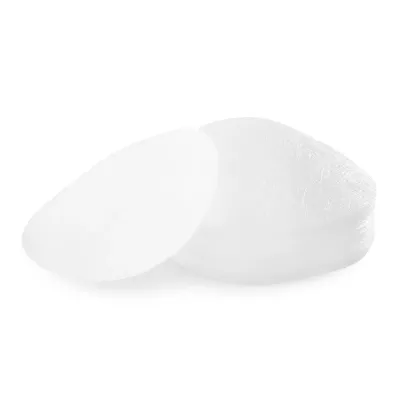
PM2.5 PTFE Filters
Lot-tested against 40 CFR Part 50, Appendix L criteria.
View Product -
Membrane Filters
Water testing and lab filtration.
Shop Membrane Filters -
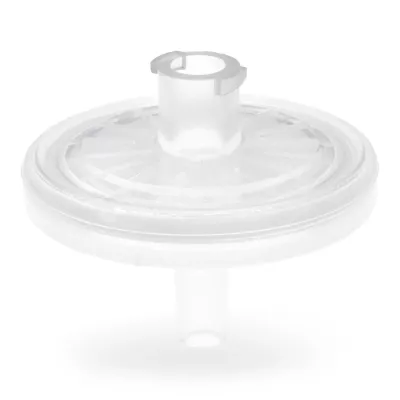
PTFE Syringe Filters, 0.45µm
Prepping solvent extracts for analysis.
View Product -
Chromatography Supplies
Vials, caps, and septa for HPLC and GC.
Shop Chromatography
Frequently asked questions
What filter does EPA Method 5 use for stack sampling?
EPA Method 5 measures particulate matter from stationary sources such as stacks. Particulate is withdrawn isokinetically from the source and collected on a glass fiber filter, which is kept heated during sampling.
What filter does the EPA PM2.5 reference method call for?
40 CFR Part 50, Appendix L calls for a 46.2 mm PTFE membrane filter with a 2.0 µm pore size, along with other listed criteria. Tisch Scientific SF18040 filters are lot-tested against those Appendix L parameters.
What pore size is used to prepare water samples for dissolved metals?
Water samples are commonly filtered through a 0.45 µm membrane, and what passes through is reported as the dissolved fraction. Always follow the filtration step in the method you are running.
Why does it matter which filter I use?
Each test method specifies the filter material and pore size it was validated with. Using a different filter can affect results and may not meet the method’s requirements, so always match the filter to the method.
Does Tisch Scientific supply filters for EPA methods?
Tisch Scientific supplies filters and lab supplies used in environmental testing, including SF18040 PTFE filters lot-tested against Appendix L criteria for PM2.5. For other methods, share the method with our team and we will help you find a matching filter.