

Why water treatment matters
Safe drinking water is one of the most basic public health protections. Treatment systems, from large municipal plants to small industrial and point-of-use systems, remove the contaminants, pathogens, and particles that would otherwise make water unsafe.
In the United States, two laws do most of the work. The Safe Drinking Water Act sets standards for public drinking water, and water systems monitor and report against those standards on required schedules. The Clean Water Act regulates pollutants that facilities discharge into rivers, lakes, and other waters.
How drinking water is treated
Treatment plants combine several steps. A typical sequence looks like this.
- Coagulation and flocculationChemicals are added so small particles clump together into larger ones.
- SedimentationThe larger particles settle out of the water.
- FiltrationWater passes through filter media or membranes that remove remaining particles and many microorganisms.
- DisinfectionChlorine, UV light, or other disinfectants inactivate remaining pathogens.
- TestingSamples are collected and analyzed to confirm the water meets standards.
Membrane technologies compared
Microfiltration removes suspended solids, bacteria, and protozoa. Ultrafiltration has smaller pores and can also remove viruses and larger molecules. Both act as a physical barrier, which matters for pathogens such as Cryptosporidium that resist chlorine.
Reverse osmosis uses a dense membrane under pressure to remove dissolved salts and many other dissolved contaminants. RO membranes foul easily, so prefilters are used upstream to remove particles and sediment and help the membrane last longer.
Filtration in compliance testing
Testing runs alongside treatment, and much of it depends on filters. Water samples are commonly filtered through a 0.45 µm membrane before dissolved metals analysis, and what passes through is reported as the dissolved fraction.
For bacteria, EPA Method 1604 filters a water sample through a 47 mm, 0.45 µm cellulose ester membrane that holds the bacteria for growth and counting. Samples headed for HPLC are filtered first with a 0.45 µm syringe filter, or 0.2 µm for UHPLC, then placed in chromatography vials. Always follow the filtration requirements in the method you are running.
How to choose the right filter
Start with the method, since it specifies the filter material and pore size it was built around. For general water sample prep, hydrophilic membranes such as PES and PVDF wet easily and filter quickly. Use membrane filters for vacuum filtration and microbiological testing, and capsule filters inline on larger volumes. Datasheets and certificates of analysis are on our Downloads and Datasheets page.
Products used in this workflow
-
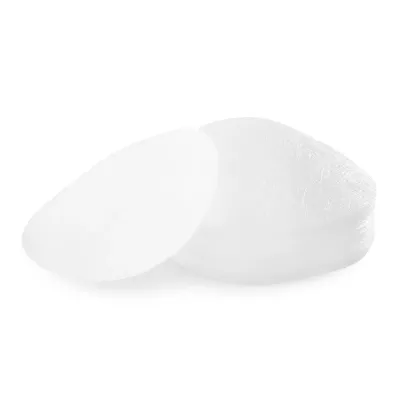
Membrane Filters
Water sample filtration and microbial testing.
Shop Membrane Filters -
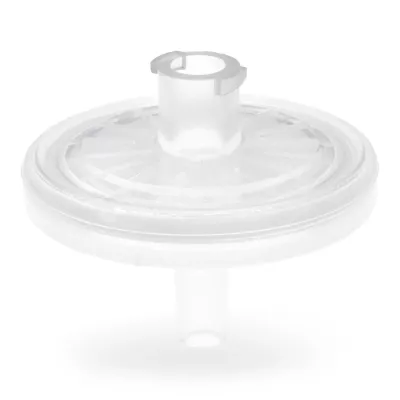
PES Syringe Filters, 0.45µm
Prepping water samples for analysis.
View Product -
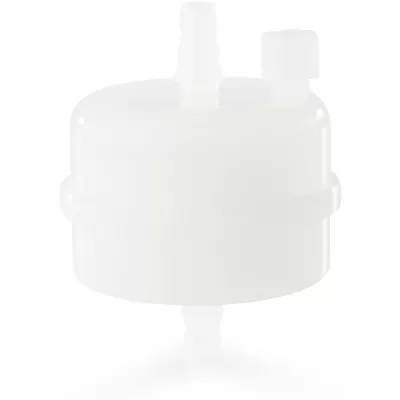
Capsule Filters
Inline filtration for larger volumes.
Shop Capsule Filters -
Chromatography Supplies
Vials, caps, and septa for HPLC.
Shop Chromatography
Frequently asked questions
What is the difference between microfiltration, ultrafiltration, and reverse osmosis?
Microfiltration removes suspended solids, bacteria, and protozoa. Ultrafiltration has smaller pores and can also remove viruses and larger molecules. Reverse osmosis uses a dense membrane under pressure to remove dissolved salts and many other dissolved contaminants.
Why is prefiltration important before reverse osmosis?
Reverse osmosis membranes foul easily. Prefilters remove particles and sediment upstream, which helps the RO membrane keep its flow, run at lower pressure, and last longer.
What pore size is used to prepare water samples for dissolved metals?
Water samples are commonly filtered through a 0.45 µm membrane, and what passes through is reported as the dissolved fraction. Always follow the filtration step in the method you are running.
What filter does EPA Method 1604 use for coliform testing?
EPA Method 1604 filters the water sample through a 47 mm, 0.45 µm cellulose ester membrane that retains the bacteria, which are then grown on a medium to detect total coliforms and E. coli.
Which laws regulate water quality in the United States?
The Safe Drinking Water Act sets standards for public drinking water, and the Clean Water Act regulates pollutants discharged into rivers, lakes, and other waters.