

Balancing demand and responsibility
In 1882, Thomas Edison’s Pearl Street Station began supplying electricity to part of lower Manhattan. Demand for energy has grown ever since, and so has attention to its environmental impact. After the Environmental Protection Agency was established in 1970, power producers faced new expectations to understand and limit the pollution their operations release.
Filtration plays a role on both sides of that balance. It helps keep fuels, water, and process fluids clean so equipment runs efficiently, and it supports the monitoring that shows whether emissions are under control.
How power is generated
Many power plants, including coal, nuclear, and some natural gas plants, use heat to make steam that spins a turbine. Many natural gas plants also use combustion turbines, often paired with a steam turbine in a combined cycle. Hydroelectric dams use flowing water instead, but are limited to suitable locations. Each approach has its own filtration needs.
Where filtration fits
Natural gas processing
Raw natural gas is processed to remove water, carbon dioxide, hydrogen sulfide, mercury, nitrogen, and heavier hydrocarbons, so the gas burns cleaner and does less damage to pipelines and equipment. Several technologies do this work, and filters remove particles and liquids along the way to protect downstream equipment.
Coal and emissions control
Coal can be cleaned before it is burned to reduce ash and some sulfur. After combustion, plants use scrubbers to remove sulfur dioxide, electrostatic precipitators or fabric filter baghouses to capture particulate, and other controls to reduce nitrogen oxides. Coal ash is either disposed of or reused, including in concrete.
Cooling water and steam systems
Plants that run on steam depend on clean water. Filtering cooling water and steam system water helps limit fouling and protects heat exchangers, turbines, and instruments.
Fuel cells and batteries
Many fuel cells need very pure hydrogen, since contaminants such as carbon monoxide and sulfur compounds can poison their catalysts. Battery and fuel cell manufacturing also relies on clean materials and careful lab testing.
Monitoring and lab testing
The EPA collects emissions data from power plants, including sulfur dioxide, nitrogen oxides, carbon dioxide, and mercury. Ambient air near plants and across regions is monitored on filters, and labs filter samples before analysis.
How to choose the right filter
Energy processes often involve corrosive gases, solvents, and high temperatures, so material choice matters. PTFE has the broadest chemical resistance and is hydrophobic, which suits gas lines and aggressive chemicals. Glass fiber handles elevated temperatures and works well as a prefilter. Check every chemical against the chemical compatibility chart.
For lab analysis, filter samples with a 0.45 µm syringe filter for standard HPLC, or 0.2 µm for UHPLC. For ambient particulate monitoring, the EPA PM2.5 reference method calls for 46.2 mm PTFE filters. Use capsule filters inline on larger process lines.
Products used in this workflow
-

PM2.5 PTFE Filters
Lot-tested against 40 CFR Part 50, Appendix L criteria.
View Product -
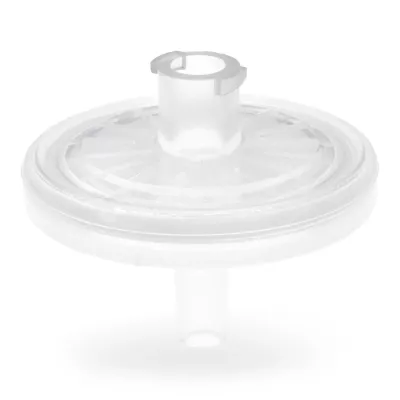
PTFE Syringe Filters, 0.45µm
Lab sample prep for aggressive chemicals.
View Product -
PTFE Membrane Filters, 0.22µm
Hydrophobic filtration for gases and chemicals.
View Product -
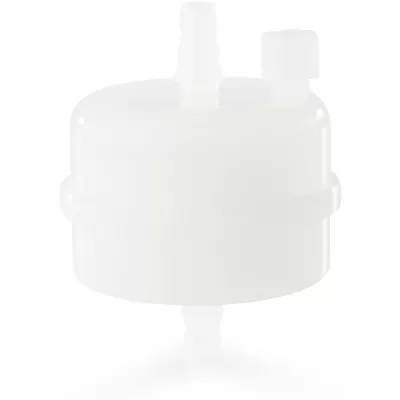
Capsule Filters
Inline filtration for larger process lines.
Shop Capsule Filters
Frequently asked questions
What is removed from natural gas before it is used?
Natural gas processing removes water, carbon dioxide, hydrogen sulfide, mercury, nitrogen, and heavier hydrocarbons. Several technologies do this work, and filters remove particles and liquids along the way to protect equipment.
How do coal plants control emissions?
Coal can be cleaned before it is burned to reduce ash and some sulfur. After combustion, plants use scrubbers to remove sulfur dioxide, electrostatic precipitators or fabric filter baghouses to capture particulate, and other controls to reduce nitrogen oxides.
Why do fuel cells need clean hydrogen?
Contaminants such as carbon monoxide and sulfur compounds can poison the catalysts inside many fuel cells and reduce their performance, so the hydrogen feed must be very pure.
What does the EPA track from power plants?
The EPA collects emissions data from power plants that includes sulfur dioxide, nitrogen oxides, carbon dioxide, and mercury.
What filter is used for ambient PM2.5 monitoring?
40 CFR Part 50, Appendix L calls for a 46.2 mm PTFE membrane filter with a 2.0 µm pore size, along with other listed criteria. Tisch Scientific SF18040 filters are lot-tested against those Appendix L parameters.