

Why filtration matters in chemical engineering
Chemical engineering sits behind everything from battery materials for electric vehicles to high-strength construction materials, and there is constant pressure to make processes cleaner, safer, and more cost-effective.
Filtration is part of almost every chemical process. It purifies raw materials, removes catalysts and solid byproducts, separates solids from liquids, clarifies product streams, and prepares samples for quality testing. Because filters come in a wide range of pore sizes and materials, they can be matched to nearly any chemistry.
Where filtration fits in a chemical process
- Prepare raw materialsFeed liquids are filtered to remove particulates before they enter the reaction.
- Run the reactionThe reaction or synthesis is carried out under controlled conditions.
- Separate solidsCatalysts, precipitates, and other solids are filtered out of the reaction mixture.
- Clarify the productFine filtration removes remaining particles from the product stream.
- Test qualitySamples are filtered before HPLC or GC analysis to confirm purity and composition.
Chemical compatibility comes first
The most important choice in chemical filtration is the filter material. A membrane that is not compatible with your chemistry can swell, weaken, or break down, which can ruin the sample and contaminate the filtrate.
- PTFE has the broadest chemical resistance and handles most aggressive acids, bases, and solvents. It is hydrophobic, so it needs pre-wetting for aqueous liquids.
- Polypropylene offers good resistance to many acids and bases.
- Nylon is compatible with many organic solvents but is not suited to strong acids.
- Cellulose and MCE are best kept to aqueous solutions.
- Glass fiber handles elevated temperatures and works well as a prefilter, but should be avoided with strong bases.
Always check your exact chemical, concentration, and temperature against the chemical compatibility chart before ordering.
Prefilters and final filters
For heavily loaded liquids, use two stages. A depth filter such as glass fiber captures particles throughout its thickness and holds a lot of material, which protects the final membrane. The final membrane, often 0.45 or 0.2 µm, then removes particles based on its pore size. This setup saves filters and time. Use syringe filters and membrane filters at the bench, and capsule filters inline on larger volumes.
Sample prep for HPLC and GC
Filtering samples before analysis protects the column and keeps results clean. A 0.45 µm syringe filter is common for standard HPLC, and 0.2 µm is used for UHPLC. PTFE is the go-to for organic solvents, while nylon and PVDF suit aqueous samples. Filtered samples then go into chromatography vials for analysis.
Best practices
- Confirm chemical compatibility before every new chemistry, not just the first time.
- Use a prefilter on heavily loaded liquids.
- Never reuse a filter between samples or chemical streams.
- Check temperature ratings when filtering hot liquids.
Products used in this workflow
-
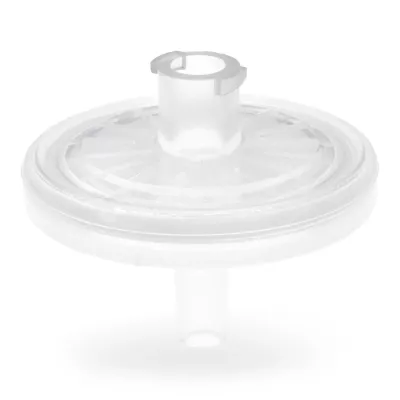
PTFE Syringe Filters, 0.45µm
Broad chemical resistance for solvent samples.
View Product -
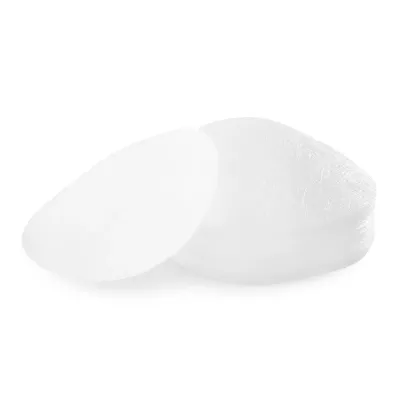
PTFE Membrane Filters, 0.22µm
Vacuum filtration of aggressive chemicals.
View Product -
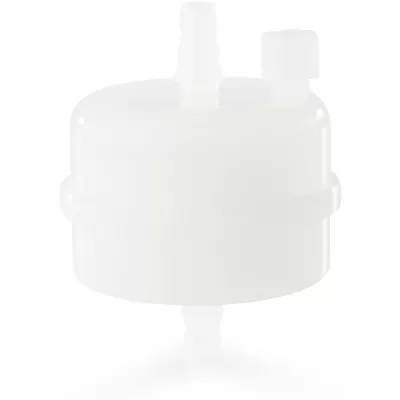
Polypropylene Capsule Filter, 1.0µm
Inline prefiltration for process liquids.
View Product -
Chromatography Supplies
Vials, caps, and septa for HPLC and GC.
Shop Chromatography
Frequently asked questions
Which membrane should I use for strong acids and bases?
PTFE has the broadest chemical resistance and handles most aggressive acids, bases, and solvents. Polypropylene also offers good resistance to many acids and bases. Always check your exact chemical, concentration, and temperature against the chemical compatibility chart.
Can I use nylon filters with organic solvents?
Nylon is compatible with many common organic solvents, but it is not suited to strong acids. For acidic solvent mixtures, PTFE is usually the safer choice.
When should I use a glass fiber filter?
Glass fiber works well as a prefilter for heavily loaded liquids and at elevated temperatures. It captures particles throughout its depth rather than at a precise pore size, so it is often placed ahead of a 0.45 or 0.2 µm membrane. Avoid it with strong bases.
Which syringe filter should I use for HPLC sample prep?
A 0.45 µm filter is common for standard HPLC, and 0.2 µm is used for UHPLC or columns packed with very small particles. PTFE suits organic solvents, while nylon and PVDF suit aqueous samples. Check compatibility with your sample and mobile phase.
Can I reuse a filter for a different chemical?
No. Syringe filters and membrane discs are single-use. Reusing them risks cross-contamination and membrane damage. For inline filtration, use dedicated filters for each chemical stream.