

What diagnostic testing involves
Diagnostic tests are built around an assay, a procedure that measures whether a specific substance is present in a sample, how much of it there is, or how active it is. The substance being measured is called the analyte. It might be a hormone, a viral protein, an antibody, or a drug.
Some assays run on large lab instruments, while others are simple enough to use at home. Filtration plays a role in both: membranes are the working surface of rapid tests, and filters clean up samples before lab analysis.
How a lateral flow test works
Lateral flow tests, like home pregnancy tests and rapid COVID-19 antigen tests, are a familiar example of membranes at work. In a typical test, the sample moves along a strip of layered materials by capillary action.
- Sample padThe sample is applied here. The pad absorbs it, can filter out particles, and prepares it to flow evenly onto the strip.
- Conjugate padDetection antibodies attached to a visible label, often gold nanoparticles, bind to the target if it is present.
- Nitrocellulose membraneThe sample and labeled antibodies wick along the membrane by capillary action.
- Test lineCapture antibodies fixed to the membrane hold the target and its label in place. A visible line means the target was detected.
- Control line and absorbent padThe control line confirms the test ran correctly, and an absorbent pad at the end draws the liquid through the strip.
Filtration in lab-based testing
In the lab, filtration mostly shows up during sample prep. Samples are filtered to remove particulates and debris that can clog membranes and columns or interfere with results. Buffers and reagents are often sterile filtered through a 0.2 µm membrane before use.
For HPLC, samples are filtered before injection to protect the column. A 0.45 µm syringe filter is common for standard HPLC, while UHPLC and columns packed with very small particles call for 0.2 µm.
How to choose the right filter
For protein and biological samples
Use a low protein binding membrane such as PES or PVDF so your target does not stick to the filter and lower your results.
For HPLC sample prep
Nylon and PVDF are common choices for aqueous samples, while PTFE is the go-to for aggressive organic solvents. Check your sample and mobile phase against the chemical compatibility chart before ordering.
For lateral flow development
Each layer of a strip uses a different material, from the nitrocellulose membrane to the sample, conjugate, and absorbent pads. If you are developing or manufacturing test strips, talk to our team about materials and custom membrane roll stock.
Products used in this workflow
-
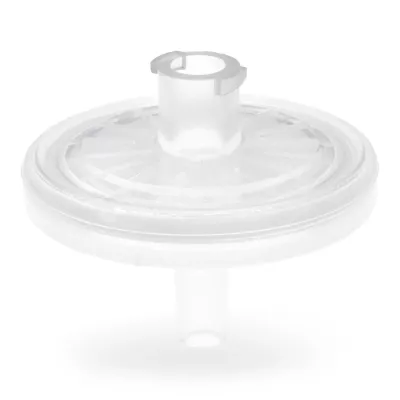
Syringe Filters
Sample clarification and HPLC prep.
Shop Syringe Filters -
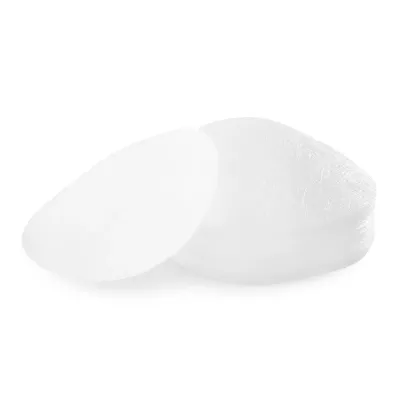
Membrane Filters
Sterile filtering buffers and reagents.
Shop Membrane Filters -
Chromatography Supplies
Vials, caps, and septa for HPLC analysis.
Shop Chromatography -
Membrane Roll Stock
Custom membrane roll stock to your spec.
Shop Roll Stock
Frequently asked questions
What membrane is used in lateral flow tests like pregnancy or COVID-19 tests?
Most lateral flow tests use a nitrocellulose membrane. It binds proteins well, so capture antibodies can be fixed in place on the test and control lines.
What does the conjugate pad do?
The conjugate pad holds detection antibodies attached to a visible label, often gold nanoparticles. When the sample reaches the pad, these labeled antibodies bind to the target, if it is present, and travel with the sample onto the membrane.
What is the difference between the test line and the control line?
The test line captures the target and its labeled antibody, so it only appears when the target is present. The control line captures the labeled antibody on its own, which confirms the sample flowed through the strip correctly. A result is only valid when the control line appears.
Which syringe filter should I use to prepare samples for HPLC?
A 0.45 µm syringe filter is common for standard HPLC. Use 0.2 µm for UHPLC or columns packed with very small particles. Nylon and PVDF are common choices for aqueous samples, and PTFE suits aggressive organic solvents. Always check compatibility with your sample and mobile phase.
Why filter samples before running an assay?
Filtering removes particulates and debris that can clog membranes and columns, raise background noise, and make results less reliable.