

What gas separation is
Gas separation splits a gas mixture into its individual components. It is used to generate nitrogen from compressed air for food packaging and electronics manufacturing, enrich oxygen, recover hydrogen in refining, remove carbon dioxide from natural gas and biogas, and dry compressed air.
There are three main ways to do it. Cryogenic distillation cools gases until they liquefy and separates them by boiling point. Pressure swing adsorption (PSA) uses adsorbent materials that hold on to certain gases under pressure and release them when the pressure drops. Membrane separation uses polymer membranes that let some gases through faster than others.
How membrane gas separation works
Most gas separation membranes are dense polymer films, not filters with open pores. Gas molecules dissolve into the membrane and diffuse through it, and each gas moves at its own rate. Faster gases such as hydrogen, carbon dioxide, and water vapor pass through more quickly than slower gases such as nitrogen and methane. Membranes are often packaged as bundles of hollow fibers, which fit a large membrane area into a compact module.
- Compress the feed gasThe gas mixture is pressurized, since the pressure difference across the membrane drives separation.
- Prefilter the gasParticulates, oil aerosols, and liquid water are removed so they do not foul or damage the membrane.
- Separate across the membraneFaster gases permeate through the membrane while slower gases continue along it.
- Collect the permeateThe fast gases exit on the low-pressure side of the membrane.
- Collect the retentateThe slow gases stay at high pressure. In a nitrogen generator, this nitrogen-rich stream is the product.
Membranes vs. other methods
Membrane systems are compact, run continuously, and have no moving parts in the separation module itself, which keeps maintenance simple. They are a common choice for on-site nitrogen generation and air drying. Cryogenic distillation is typically used for very large volumes and very high purities, while PSA is widely used for on-site nitrogen and oxygen generation at moderate scales. The right choice depends on the purity, volume, and pressure you need.
Where filters protect the process
Whatever method you use, clean gas protects the equipment. Hydrophobic membrane filters and capsule filters keep particulates and liquid water out of gas lines, separation modules, and vents. Smaller PTFE syringe filters protect analytical instruments when gas samples are collected for testing.
For gas chromatography and analyzers that need a clean, consistent baseline, the ZA Series zero air generators supply zero air on demand without cylinders.
Choosing a filter for gas service
Use a hydrophobic membrane such as PTFE for gas lines and vents. It lets gas through while staying dry, and it resists most aggressive chemicals. Check your gases and any cleaning agents against the chemical compatibility chart before ordering.
Products used in this workflow
-

PTFE Membrane Filters
Hydrophobic membranes for gas filtration and venting.
View Product -
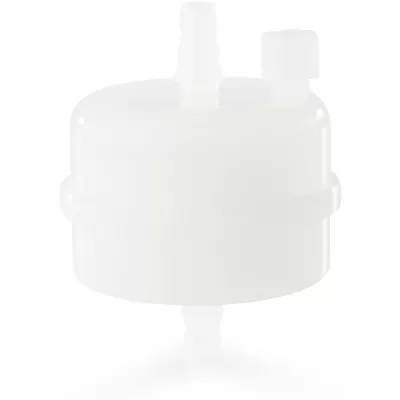
Capsule Filters
Inline filtration for gas and process lines.
Shop Capsule Filters -
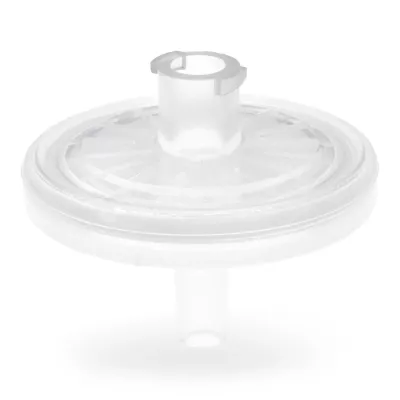
Syringe Filters
Protecting analyzers during gas sampling.
Shop Syringe Filters -
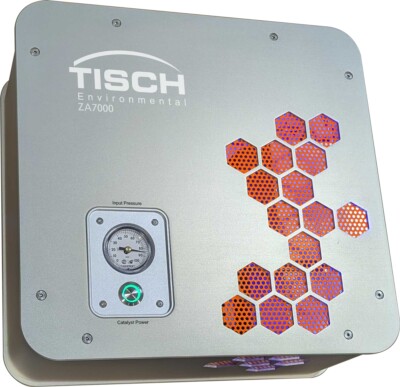
ZA Series Zero Air Generators
On-demand zero air for GC and analyzers.
View Series
Frequently asked questions
How does membrane gas separation work?
Most gas separation membranes are dense polymer films without open pores. Gas molecules dissolve into the membrane and diffuse through it, and each gas does this at a different rate. Faster gases such as hydrogen, carbon dioxide, and water vapor pass through more quickly than slower gases such as nitrogen and methane, which splits the feed into two streams.
Why does a gas separation system need a prefilter?
Particulates, oil aerosols, and liquid water can foul or damage a separation membrane. A prefilter upstream removes them so the membrane keeps performing and lasts longer.
What is the difference between gas separation and air purification?
Gas separation splits a gas mixture into its components, such as pulling nitrogen out of compressed air. Air purification removes contaminants and particulates from air so it is clean enough for a process or space.
Why use hydrophobic filters on gas lines?
Hydrophobic membranes such as PTFE let gas pass while keeping liquid water out. A hydrophilic membrane can wet out when moisture condenses, which blocks gas flow.
Does Tisch Scientific sell gas separation membranes?
Tisch Scientific supplies the filters used to protect gas lines, separation systems, and analyzers, along with zero air generators for analytical work. For questions about a specific separation setup, talk to our team.