Your Cart (0)


← Back to Bioscience
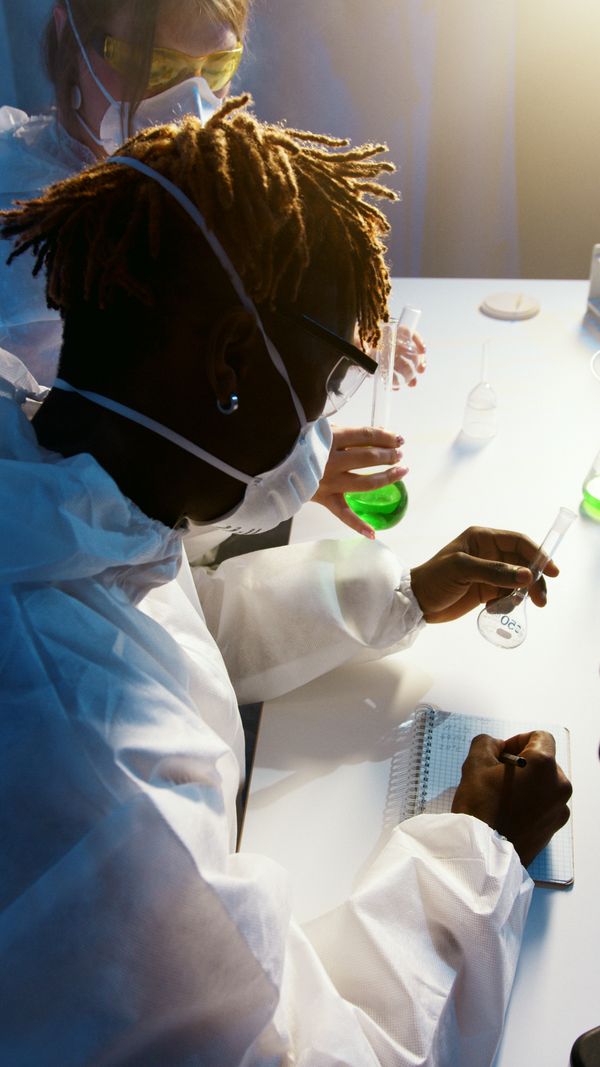
Biomolecule Purification
Biomolecule Purification is used extensively in biotechnology fields for research and the development of pharmaceuticals. The purification process helps scientists isolate proteins and DNA from complex mixtures.
The purification process begins with breaking down cells to study their base structures. This process, called Cell Lysis, may use several different methods. The desired result of Cell Lysis is to break down cell walls and separate the cell's molecules.
Once the cell breaks down into a soluble supernatant, the larger particles are filtered out using centrifugal filter tubes in a centrifuge. These molecules are extremely tiny. Depending on the biomolecules needed for testing, the scientist may choose from microfiltration, ultrafiltration, or nanofiltration processes. Typical filtration media, with pores as small as 0.2 µm to 0.05 µm, is necessary.
Often, the filtered proteins require additional processing before use. A salt, usually ammonium sulfate, is gradually added to the protein solution. This process is called "salting-in." The ammonium sulfate increases the ionic strength of the solution. As the ionic strength increases, the protein solubility decreases. Salt ions compete with the protein molecules to join with water molecules. In this solution, the protein molecules are concentrated and precipitate out. Further centrifugal filtration is required to recover the protein molecules.
Additional purification, using chromatography, separates molecules based on size or ionic charge. Size exclusion, ion exchange, affinity, and hydrophobic interaction chromatography produce differing results. For high-resolution results some bioengineers use High-Performance Liquid Chromatography (HPLC).
Biomolecule purification is used when developing therapeutic drugs, vaccines, research, diagnostic tests, and industrial processes for food production, textile manufacturing, and biofuel production.
0.05–0.2 µm
Typical pore size range
3 methods
Micro / ultra / nanofiltration
PVDF / PES
Recommended materials
HPLC ready
High-resolution option
Biomolecule purification requires precise filtration at multiple stages to isolate target molecules — proteins, DNA, RNA, or antibodies — from complex biological mixtures. Each stage uses a different filtration method depending on the size and nature of the target molecule.
Step-by-step process
1
Cell lysis
Cell walls broken down to release target molecules into solution
2
Clarification
Centrifugal filtration removes cell debris from the supernatant
3
Micro / ultrafiltration
Target molecules isolated by pore size or molecular weight cutoff
4
Salting-in
Ammonium sulfate added to concentrate and precipitate proteins
5
Chromatography
Final separation by size or ionic charge for high-purity results
Key filtration requirements by process stage
| Process stage | Filtration method | Pore size / cutoff | Recommended product |
|---|---|---|---|
| Post-lysis clarification | Microfiltration | 0.2–0.45 µm | Syringe filters (PVDF) |
| Protein concentration | Ultrafiltration | MWCO based | Centrifugal filter tubes |
| Buffer exchange / desalting | Diafiltration | MWCO based | Centrifugal filter tubes |
| Large-scale concentration | Tangential flow (TFF) | 0.1–0.65 µm | Hollow fiber filters |
| HPLC sample prep | Pre-filtration | 0.2 µm | Syringe filters / Chromatography vials |
Filter selection tool
Select your target molecule and filtration method to get a product recommendation.
Filtration type comparison
| Filtration type | Pore / cutoff | Removes | Retains | Common use |
|---|---|---|---|---|
| Microfiltration | 0.1–1.0 µm | Cells, debris | Proteins, DNA | Clarification after lysis |
| Ultrafiltration | 1–100 kDa MWCO | Salts, small molecules | Proteins, nucleic acids | Concentration, buffer exchange |
| Nanofiltration | < 1 kDa MWCO | Small organics, ions | Larger biomolecules | Desalting, polishing |
| Chromatography | By charge or size | Contaminant proteins | Target molecule | Final high-purity separation |
Membrane material compatibility
| Membrane | Pore size | Low protein binding | Aqueous compatible | Protein purification | DNA / RNA use |
|---|---|---|---|---|---|
| PVDF | 0.1–0.45 µm | ||||
| PES (Polyethersulfone) | 0.2–0.45 µm | ||||
| Cellulose Acetate | 0.2–0.45 µm | ||||
| Nylon | 0.2–0.45 µm | ||||
| MCE (Mixed Cellulose Ester) | 0.22–0.45 µm |
Recommended
Use with caution
Not suitable
Recommended for biomolecule purification
Most used
Centrifugal Filter Tubes
Concentrate proteins and perform buffer exchange in a single step. Available in multiple MWCO options.
Shop centrifugal filters →
Most used
Chromatography
Vials, caps, and accessories for HPLC, size-exclusion, and ion-exchange chromatography workflows.
Shop chromatography →
Common
Syringe Filters
0.2 µm PVDF or PES for post-lysis clarification and HPLC sample preparation.
Shop syringe filters →
Common
Membrane Filters
PVDF and PES low-binding disc filters for vacuum filtration of protein and DNA solutions.
Shop membrane filters →
Common
Hollow Fiber Filters
Tangential flow filtration for large-scale biomolecule concentration and diafiltration.
Shop hollow fiber filters →
Common
Capsule Filters
Scalable dead-end filtration for clarification and sterile filtration of larger sample volumes.
Shop capsule filters →
Not sure which product is right for your workflow? Use the Filter Selection Guide tab or contact our technical team.
What is the difference between microfiltration, ultrafiltration, and nanofiltration?+
Microfiltration (0.1–1 µm) removes cells and debris while retaining proteins. Ultrafiltration uses molecular weight cutoff (MWCO) membranes to concentrate proteins or exchange buffers. Nanofiltration operates at very small cutoffs to remove salts and small organics while retaining larger biomolecules.
Which membrane is best for filtering protein solutions?+
For protein solutions, always use a low protein-binding membrane such as PVDF, PES, or Cellulose Acetate. Avoid Nylon — it has a significantly higher protein binding affinity which can reduce yield and compromise results. PVDF is generally the first choice for high-sensitivity protein work.
When should I use chromatography instead of membrane filtration?+
Membrane filtration is best for bulk clarification, concentration, and buffer exchange. Chromatography is used for high-resolution separation based on size, charge, or affinity — it is typically the final polishing step. Most workflows use both: filtration first to clarify the sample, then chromatography to isolate the target molecule at high purity.
What is "salting-in" and why is it used in protein purification?+
Salting-in refers to adding ammonium sulfate to a protein solution to increase ionic strength. As ionic strength rises, protein solubility decreases and proteins concentrate and precipitate out of solution. Centrifugal filtration is then used to recover the precipitated proteins for further processing or analysis.
What pore size should I use after cell lysis?+
After cell lysis, a 0.2–0.45 µm syringe or membrane filter is commonly used to remove cellular debris before downstream processing. If your target molecule is very small, follow up with an ultrafiltration membrane at the appropriate MWCO to concentrate and clean the sample further.
Which membrane is best for filtering DNA or RNA?+
For nucleic acid work, use low-binding PES or PVDF membranes for clarification steps. MCE membranes are also commonly used for vacuum filtration prior to nucleic acid isolation. Avoid membranes with high non-specific binding as this can result in significant sample loss.
Tisch Scientific
Find the right filter
for your application
for your application
Browse centrifugal filter tubes, syringe filters, hollow fiber filters, chromatography products, and more — all available in configurations optimized for biomolecule purification workflows.