Your Cart (0)


← Back to Bioscience
Bioprocessing
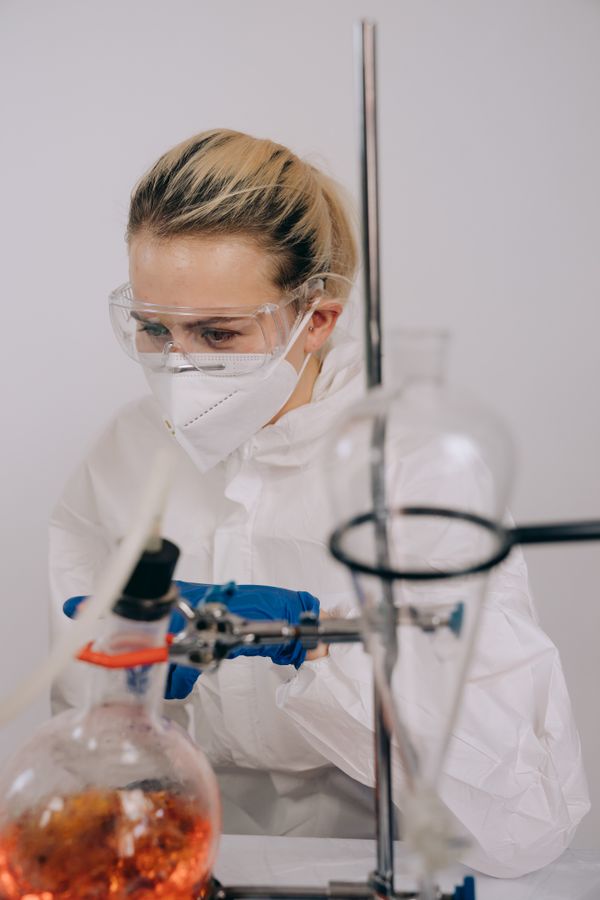
As scientists discover new levels of understanding in the physical world, these innovators develop new and exciting ways to push the boundaries of scientific advancement. Advancements arrive in the form of new medications, alternative manufacturing processes, or a better understanding of sustainability and the use of renewable resources. While each method is unique in scope and execution, they all share the need for precise control over production processes.
In bioscience fields, there are two primary distinctions. Intracellular processes and extracellular processes form the defining line between cellular and molecular processing. Intracellular processes break cells apart through cell disruption. Filters with microscopic pore openings remove cellular debris and purify the samples for testing.
The extracellular processes help to lead research into new biofuels, biodegradable plastics, industrial enzymes, and more. Filtration methods for extraction, precipitation, crystallization, and centrifugation allow scientists to isolate ethanol, antibiotics, and oils. For example, microalgae were grown through extracellular processes to serve as a viable target for biofuels and other bioactive compounds.
Filtration products allow for precise control over research and testing processes. By understanding that target elements have size constraints, scientists use filters with corresponding pore sizes to purify samples or isolate targeted molecules. For example, white blood cells are 25 microns while red blood cells are 7–8 microns. Using a filter with 20-micron pores on a blood test would filter out anything larger than 20 microns in size, including white blood cells.
The requirements for different bioprocessing methods will also determine the type of filtration needed. Centrifugal filter tubes, vacuum-aided filtration, tangential filtration, and chromatography filter papers all provide options to obtain specific results.
The evolution of scientific methods using bioprocessing is crucial for unlocking new potentials in biosciences. The delicate interplay between intracellular and extracellular processes, including precise filtration techniques, enables researchers to enhance their findings. Additionally, by tailoring filtration solutions to specific bioprocessing needs, scientists drive innovations that promote sustainability, new therapies, and advanced materials. The dedication of professionals in the bioscience industry, and their unrelenting research, will continue to drive transformative advancements to address our most pressing global challenges.
2 process types
Intra & extracellular
TFF & dead-end
Primary filtration modes
7–25 µm
Blood cell size range (example)
Bench to production
Scalable filtration solutions
Bioprocessing workflows range from bench-scale research to full production manufacturing. Whether the target product forms inside cells (intracellular) or is secreted into the surrounding medium (extracellular), precise filtration at each stage is essential to isolate, concentrate, and purify the final product.
Step-by-step process
1
Cell growth
Organisms grown in bioreactor or fermenter under controlled conditions
2
Disruption or harvest
Intracellular: cells disrupted to release product. Extracellular: product collected from broth
3
Clarification
Cell debris removed by filtration or centrifugation
4
Concentration
Product concentrated via ultrafiltration or tangential flow
5
Polishing
Final purification by chromatography for product use
Key filtration requirements by process stage
| Process stage | Filtration method | Typical pore / format | Recommended product |
|---|---|---|---|
| Cell debris removal | Dead-end filtration | 0.2–0.45 µm | Syringe filters / Membrane filters |
| Cell harvest / clarification | Tangential flow (TFF) | 0.1–0.65 µm | Hollow fiber filters / Capsule filters |
| Product concentration | Ultrafiltration (TFF) | MWCO based | Hollow fiber filters / Centrifugal filter tubes |
| Sterile gas / air filtration | Hydrophobic dead-end | 0.2 µm PTFE | Capsule filters / Cartridge filters |
| Final polishing | Chromatography | By charge / size | Chromatography vials & accessories |
Filter selection tool
Select your process type and scale to get a product recommendation.
Filtration method by bioprocessing stage
| Process stage | Filtration method | Typical pore / format | Key products |
|---|---|---|---|
| Cell debris removal | Dead-end filtration | 0.2–0.45 µm | Syringe filters, membrane filters |
| Cell harvest / clarification | Tangential flow (TFF) | 0.1–0.65 µm | Hollow fiber, capsule filters |
| Product concentration | Ultrafiltration (TFF) | MWCO based | Hollow fiber, centrifugal tubes |
| Sterile gas filtration | Hydrophobic dead-end | 0.2 µm PTFE | Capsule filters, cartridge filters |
| Final polishing | Chromatography | By charge / size | Chromatography vials & accessories |
Pore size guide by organism type
| Organism | Typical cell size | Recommended pore size for harvest | Notes |
|---|---|---|---|
| Bacteria (E. coli, etc.) | 1–10 µm | 0.2–0.45 µm | Retains cells; allows media to pass |
| Yeast | 3–10 µm | 0.45–0.65 µm | Larger pore reduces fouling |
| Mammalian cells | 10–30 µm | 0.65 µm or larger | Gentle TFF preferred to maintain viability |
| Microalgae | 2–200 µm | Species dependent | Trial filtration recommended |
Recommended for bioprocessing
Most used
Capsule Filters
Scalable dead-end filtration for clarification, sterile gas filtration, and production stream processing.
Shop capsule filters →
Most used
Hollow Fiber Filters
Tangential flow filtration for cell harvest, product concentration, and diafiltration at scale.
Shop hollow fiber filters →
Common
Centrifugal Filter Tubes
Bench-scale concentration and buffer exchange of harvested product.
Shop centrifugal filters →
Common
Cartridge Filters
High-throughput filtration for scalable production-scale bioprocessing workflows.
Shop cartridge filters →
Common
Syringe Filters
0.2–0.45 µm for bench-scale clarification and sterile filtration of media and process streams.
Shop syringe filters →
Common
Chromatography
Final polishing and high-purity separation of bioprocess products by size or ionic charge.
Shop chromatography →
Not sure which product is right for your workflow? Use the Filter Selection Guide tab or contact our technical team.
What is the difference between intracellular and extracellular bioprocessing?+
Intracellular bioprocessing involves breaking open cells to access products formed inside them, such as intracellular enzymes or recombinant proteins. Extracellular bioprocessing collects products secreted directly into the growth medium — such as antibiotics, ethanol, or extracellular enzymes — without requiring cell disruption.
What is tangential flow filtration (TFF) and when is it used?+
TFF (also called crossflow filtration) runs the feed stream parallel to the membrane surface rather than through it, which prevents clogging and enables continuous processing. It is used in bioprocessing for cell harvest, product concentration, and diafiltration (buffer exchange) — particularly at pilot and production scales where dead-end filtration would foul too quickly.
How do I select a pore size for cell harvesting?+
Pore size depends on the organism. For bacteria (1–10 µm), a 0.2–0.45 µm membrane retains cells. For mammalian cells (10–30 µm), 0.65 µm or larger is appropriate. For yeast (3–10 µm), 0.45–0.65 µm is typical. Always confirm with a small-scale trial before committing to large-scale production runs.
What filtration is needed for bioreactor gas filtration?+
Air and gas entering bioreactors must be filtered using a 0.2 µm hydrophobic membrane — typically PTFE — to prevent contamination. Capsule filters or cartridge filters with PTFE membranes are the standard choice for sterile gas filtration in production-scale bioreactors.
Can I scale from syringe filters to capsule filters for the same application?+
Yes. Syringe filters and capsule filters using the same membrane material and pore size are generally interchangeable across scales. Syringe filters handle small volumes (up to ~100 mL); capsule filters handle larger volumes (up to several liters). Always verify flow rate and pressure specifications when scaling up.
What are common applications of extracellular bioprocessing?+
Extracellular bioprocessing is used to produce biofuels (e.g. ethanol from microalgae or yeast), industrial enzymes for food and textile manufacturing, antibiotics, biodegradable plastics, and bioactive compounds for pharmaceuticals. The product is secreted into the growth medium and recovered through filtration, precipitation, or chromatography.
Tisch Scientific
Find the right filter
for your application
for your application
Browse capsule filters, hollow fiber filters, cartridge filters, centrifugal tubes, and more — all available in configurations optimized for bioprocessing workflows at any scale.