Your Cart (0)


← Back to Bioscience
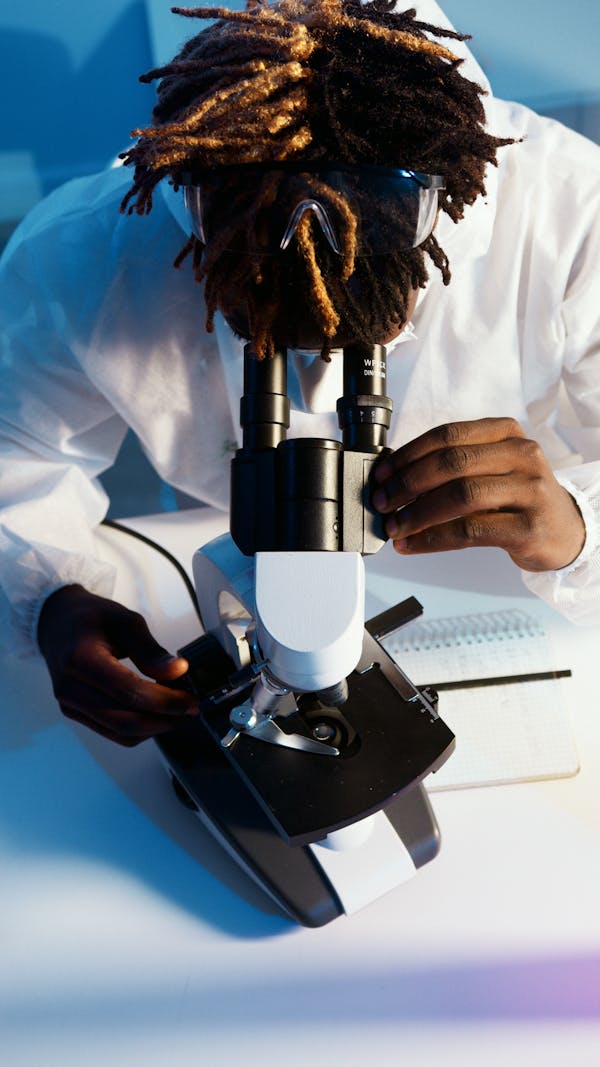
Cell Culturing and Tissue Engineering
In biochemistry, there are many specific applications for using filtration products. Each application implements a filtration process whereby a target cell is isolated from a buffer solution and placed onto a growth medium. Through these growth processes, scientists can study or engineer cell replication. When scientists understand how the building blocks of the physical world are laid, they can unlock the answers to many of the fundamental challenges facing mankind.
In cell culturing, a sample is taken from tissue and placed onto a growth media, like agar gel on a Petri dish, or into a liquid solution containing nutrients. The sample is placed into an incubator that encourages the cells to multiply and eventually form a population of cells. These cells can be used for genetic research, toxicology studies, pharmaceutical effectiveness or hazard studies, and even the production of therapeutic proteins.
With tissue engineering, cells are taken from a sample tissue and seeded onto a scaffold made of natural or synthetic material. The seeded scaffold is placed into an incubator or bioreactor to encourage cell growth. The cells form new tissue on the scaffold that matches the tissue donor's needs.
Once the tissue sample has matured, the new tissue can be surgically attached to the donor to replace damaged tissues. These are especially effective in repairing damaged or diseased tissue with a reduced chance of tissue rejection.
Both cell culturing and tissue engineering applications require a very high-quality sample. Samples must be filtered using sterile filters with proper pore sizes and material type for the application. Additionally, throughout the cell maturation process, the tissues must be kept free from contaminants that could render them unusable.
The choice of filter membrane material and pore sizes depend largely on the specific application. The most common pore sizes required in these applications range from 0.2 µm to 0.45 µm. Membrane materials should have compatible protein-binding properties, flow rates, and chemical and temperature resistance.
For more information on the compatibility of different filter material types for your specific application, please view our material compatibility guide.
0.2–0.45 µm
Typical pore size range
Sterile-grade
Filtration required
Low binding
Preferred membrane property
PES / PVDF
Recommended materials
Filtration is critical at multiple stages of both cell culturing and tissue engineering workflows. The quality and sterility of each filtered sample directly impacts the viability of cells and the integrity of the final tissue or research output. Below is a typical workflow and where filtration plays a role at each step.
Step-by-step process
1
Sample collection & prep
Tissue sample collected and suspended in sterile buffer
2
Sterile filtration
0.2 µm PES or PVDF filter removes bacteria and mycoplasma
3
Culture or scaffold seeding
Cells placed on growth media or seeded onto scaffold
4
Incubation & growth
Cells multiply; media replenished and re-filtered throughout
5
Harvest & use
Cells or tissue harvested for research, testing, or implant
Key filtration requirements by process stage
| Process stage | Filtration need | Pore size | Recommended product |
|---|---|---|---|
| Buffer & media preparation | Sterile filtration | 0.2 µm | Syringe filters / Membrane filters |
| Serum filtration (e.g. FBS) | Mycoplasma removal | 0.1 µm | Syringe filters — PES |
| Bioreactor feed (large volume) | Bulk sterile filtration | 0.2 µm | Capsule filters |
| Protein / media concentration | Buffer exchange | MWCO based | Centrifugal filter tubes |
Filter selection tool
Select your sample type and volume to get a product recommendation.
Membrane material compatibility
| Membrane | Pore size | Low protein binding | Sterile-grade | Aqueous compatible | Cell culture use |
|---|---|---|---|---|---|
| PES (Polyethersulfone) | 0.2–0.45 µm | ||||
| PVDF | 0.1–0.45 µm | ||||
| Nylon | 0.2–0.45 µm | ||||
| MCE (Mixed Cellulose Ester) | 0.22–0.45 µm | ||||
| PTFE | 0.1–1.0 µm | ||||
| Cellulose Acetate | 0.2–0.45 µm |
Recommended
Use with caution
Not suitable
Recommended for cell culturing & tissue engineering
Most used
Syringe Filters
0.2 µm PES or PVDF for sterile-filtering culture media and buffers. Available in 13mm and 25mm diameters.
Shop syringe filters →
Most used
Membrane Filters
PES or MCE disc filters for vacuum filtration setups and bulk culture media sterilization.
Shop membrane filters →
Common
Capsule Filters
Ideal for larger volume filtration in bioreactor feeds and scaffold preparation workflows.
Shop capsule filters →
Common
Centrifugal Filter Tubes
Concentrate or buffer-exchange protein solutions used in culture media preparation.
Shop centrifugal filters →
Common
Membrane Roll Stock
Custom cut to size for specialized scaffold fabrication or culture vessel applications.
Shop roll stock →
Common
In-Line Disk Filters
Used in-line for continuous culture systems and automated media delivery setups.
Shop in-line filters →
Not sure which product is right for your setup? Use the Filter Selection Guide tab or contact our technical team.
What pore size is needed for sterile cell culture filtration?+
A 0.22 µm (often labeled 0.2 µm) pore size is the standard for sterile filtration of cell culture media and buffers. It removes bacteria, mycoplasma, and other microorganisms while allowing your target molecules to pass through freely. If full sterilization is not required, 0.45 µm can be used for general particle removal.
What membrane material is best for protein-containing solutions?+
For protein-containing media or sera, always choose a low protein-binding membrane such as PES, PVDF, or Cellulose Acetate. Avoid Nylon for protein-heavy solutions — it has a higher protein binding affinity which can significantly reduce your sample yield.
What is the difference between cell culturing and tissue engineering in terms of filtration needs?+
Both require sterile filtration, but tissue engineering often involves larger volumes for bioreactor feeds and may therefore require capsule or cartridge filters. Cell culturing is typically smaller scale and syringe filters or membrane disc filters are most commonly used. Both demand low extractable levels to avoid cytotoxicity to the cells.
Can I reuse syringe filters for cell culture media?+
No. Syringe filters used for sterile cell culture filtration should never be reused. Reuse risks cross-contamination and membrane integrity compromise, which can introduce cytotoxic extractables into your culture. Always use a new, sterile filter for each filtration event.
What filter should I use for filtering serum such as FBS?+
Fetal bovine serum (FBS) and similar biological sera should be filtered through a 0.1 µm or 0.2 µm low protein-binding membrane such as PES or PVDF. For volumes over 100 mL, a capsule filter or bottle-top vacuum filter unit is recommended to maintain throughput.
How do I verify filter compatibility with my culture media?+
Refer to the Tisch Scientific Material Compatibility Chart to match your specific solution chemistry to the correct membrane material. When introducing a new media formulation, it is always best practice to run a small-scale extraction test before committing to large-volume filtration runs.
Tisch Scientific
Find the right filter
for your application
for your application
Browse syringe filters, membrane filters, capsule filters, and more — all available in the pore sizes and membrane materials needed for cell culturing and tissue engineering workflows.