Your Cart (0)


← Back to Air and Gas Monitoring
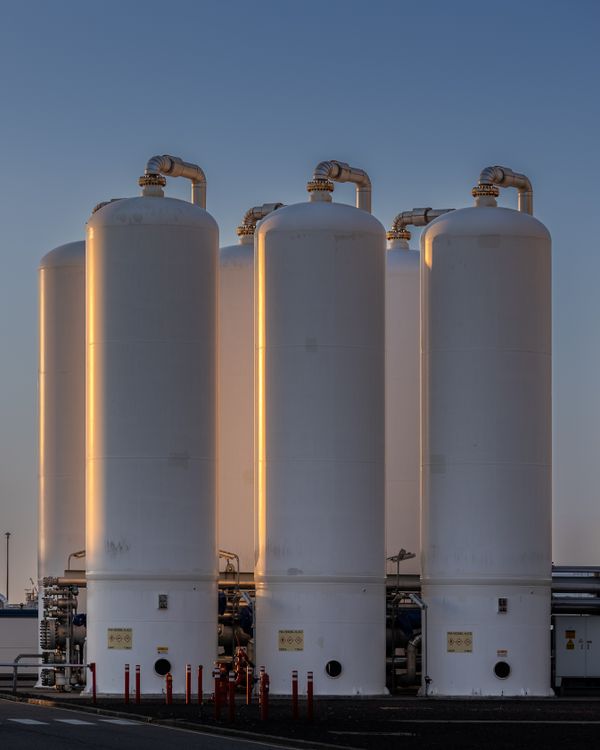
The Essential Role of Process Gas Filtration in Industry
Process gas filtration is a method used across many different industries. As with most other filtration processes, the desired result is a purified gas. Clean and purified gas helps to create chemical compounds, is a vital component in the manufacture of semiconductors, and aids in food and beverage processing and packaging.
Filters are a low-cost solution for removing contaminants from gas streams and provide the flexibility of differing pore sizes, material construction, and chemical resistance. The flexibility of filtration makes it adaptable to many different industrial processes. The variety of filtration options provides solutions for high heat, corrosive elements, and microscopic particulates.
When designing solutions for demanding applications, engineers must consider the type of materials removed from the gasses. Some filtered materials may bind to the filtration media and make the filters prone to clogging. In processes where filters are likely to clog, regular replacement schedules help to maintain high throughput and quality results.
Process gas filtration is necessary for the production of many different chemical compounds. Specialty gasses like helium, neon, and argon are all created through gas filtration. Other common compounds created from gas processing include sulfuric acid, nitric acid, urea, and ammonia. Even dyes, pigments, plastics, and polymers owe their origin to production using purified gasses.
Dry etching, used to manufacture highly specialized semiconductors, uses gases and plasma to remove material from a wafer. The remaining structure of the wafer, after the etching process, forms a carefully designed circuit pattern. Gas process filtration provides the ultra-pure gasses needed to perform the highly precise etching required.
Oxygen is a fundamental element that drives many chemical processes on Earth. Its reactivity is essential for life, but it can also cause degradation to other materials. Specifically in food processing, oxygen can accelerate decomposition and bacterial growth. For this reason, foods are packaged using processed gas filtration. Nitrogen is heavier than oxygen and displaces oxygen in packaging. Nitrogen doesn't react with the food. Therefore, Modified Atmosphere Packaging (MAP), or gas-tight packaging, retains colors, structures, and flavors. MAP has become a cost-effective alternative to using preservatives or other gasses like carbon dioxide to extend the shelf-life of consumables.
As industries continue to evolve and demand greater efficiency and quality, the importance of process gas filtration will undoubtedly grow, safeguarding not only the integrity of products but also enhancing sustainability practices. With ongoing advancements in filtration technology, we can expect even more innovative solutions that will drive progress across numerous sectors.
PTFE / PP
Preferred membrane materials
Ultra-pure
Semiconductor gas purity standard
MAP
Modified Atmosphere Packaging
Multi-industry
Chemical · Semiconductor · Food & Bev
Process gas filtration protects equipment, ensures product purity, and enables precise chemical reactions across a wide range of industrial applications. The filtration approach varies by industry — from ultra-pure semiconductor manufacturing to food-safe nitrogen generation — but the core requirement is the same: consistent, reliable removal of contaminants from the gas stream.
Step-by-step process
1
Feed gas intake
Raw or mixed gas stream enters the process line
2
Pre-filtration
Coarse particles and moisture removed to protect downstream equipment
3
Fine filtration
PTFE or PP membrane removes sub-micron particulates and contaminants
4
Process delivery
Purified gas delivered to manufacturing process at required purity
5
Filter maintenance
Scheduled filter replacement maintains throughput and purity over time
Key filtration requirements by industry
| Industry | Application | Purity requirement | Recommended product |
|---|---|---|---|
| Semiconductor manufacturing | Dry etching gas supply | Ultra-pure (ppb level) | Capsule filters (PTFE) |
| Chemical production | Specialty gas & compound synthesis | High purity | Cartridge filters / Capsule filters |
| Food & beverage packaging | Modified Atmosphere Packaging (MAP) | Food-safe, oil-free N₂ | Capsule filters (PTFE) |
| Pharmaceutical manufacturing | Sterile gas supply for bioreactors | 0.2 µm sterile | Capsule filters (PTFE) |
| General industrial | Compressed air / instrument gas | Particulate-free | In-line disk filters / Cartridge filters |
Filter selection tool
Select your industry and process scale to get a product recommendation.
Membrane material compatibility for process gas
| Membrane material | Chemical resistance | High temperature | Low extractables | Process gas use |
|---|---|---|---|---|
| PTFE | Excellent | |||
| Polypropylene (PP) | Good | |||
| PVDF | Good | |||
| Polysulfone (PS) | Moderate | |||
| Nylon | Poor |
Recommended
Use with caution
Not suitable
Recommended for process gas filtration
Most used
Capsule Filters
PTFE capsule filters for inline process gas filtration — semiconductor, pharma, food packaging, and more.
Shop capsule filters →
Most used
Cartridge Filters
High-throughput PTFE cartridge filters for large-scale chemical production and industrial gas streams.
Shop cartridge filters →
Common
In-Line Disk Filters
Compact PTFE in-line filters for continuous compressed air and instrument gas protection.
Shop in-line filters →
Common
Membrane Filters
PTFE disc membrane filters for laboratory-scale process gas analysis and validation testing.
Shop membrane filters →
Common
Syringe Filters
PTFE syringe filters for small-scale gas sample preparation and analytical laboratory workflows.
Shop syringe filters →
Common
Hollow Fiber Filters
Laminar flow hollow fiber filters for continuous high-volume gas processing and specialty gas production.
Shop hollow fiber filters →
Not sure which product fits your process? Use the Filter Selection Guide tab or contact our technical team.
What industries rely most heavily on process gas filtration?+
Process gas filtration is critical across semiconductor manufacturing (ultra-pure gases for dry etching), chemical production (specialty gases like helium, argon, and neon, plus compounds like ammonia and sulfuric acid), food and beverage (nitrogen for Modified Atmosphere Packaging), pharmaceutical manufacturing (sterile gas supply for bioreactors), and general industrial applications (compressed air and instrument gas protection).
Why is PTFE the preferred membrane for process gas applications?+
PTFE offers the broadest chemical resistance of any common membrane material, making it compatible with corrosive gases, reactive compounds, and high-temperature streams that would degrade other materials. It is also hydrophobic, which prevents moisture from blocking pores, and has extremely low extractables — critical for high-purity and food-safe applications.
What is Modified Atmosphere Packaging (MAP) and how does filtration support it?+
MAP is a food packaging method that replaces the air inside packaging with a controlled gas mixture — typically nitrogen — to extend shelf life by displacing oxygen, which causes decomposition and bacterial growth. Process gas filtration ensures the nitrogen used in MAP is free of contaminants, oil, moisture, and particles. PTFE capsule filters are the standard choice for food-safe gas filtration in MAP applications.
How do I prevent filter clogging in process gas applications?+
Filter clogging in gas applications is typically caused by particulate loading, moisture condensation, or sticky contaminants binding to the membrane. To minimize clogging: select a membrane material that does not bind the contaminant being removed, use pre-filtration to remove coarse particles before the fine filtration stage, implement a scheduled replacement program based on pressure drop monitoring, and ensure the gas stream is dry before it reaches the filtration membrane.
What pore size should I use for semiconductor process gas filtration?+
Semiconductor manufacturing requires ultra-pure gases at the parts-per-billion (ppb) level. PTFE capsule filters at 0.003–0.01 µm are used for the most demanding applications. For general instrument gas protection and less critical gas streams in semiconductor facilities, 0.01–0.2 µm PTFE capsule or cartridge filters are appropriate. Always consult the gas purity specification for your specific process node.
Can the same filter be used for different gas types in a multi-process facility?+
Generally, no. Filters used with reactive or corrosive gases should not be reused with other gas types due to the risk of cross-contamination. In multi-process facilities, dedicated filter assemblies for each gas stream are strongly recommended. Filters should also never be removed and reinserted once they have been exposed to a reactive gas — always replace with a new filter when maintenance is required.
Tisch Scientific
Find the right filter
for your application
for your application
Browse PTFE capsule filters, cartridge filters, in-line disk filters, hollow fiber filters, and more — all optimized for industrial process gas filtration workflows.